Malihah Nassar: A Woman Standing Alone Against a Settler System
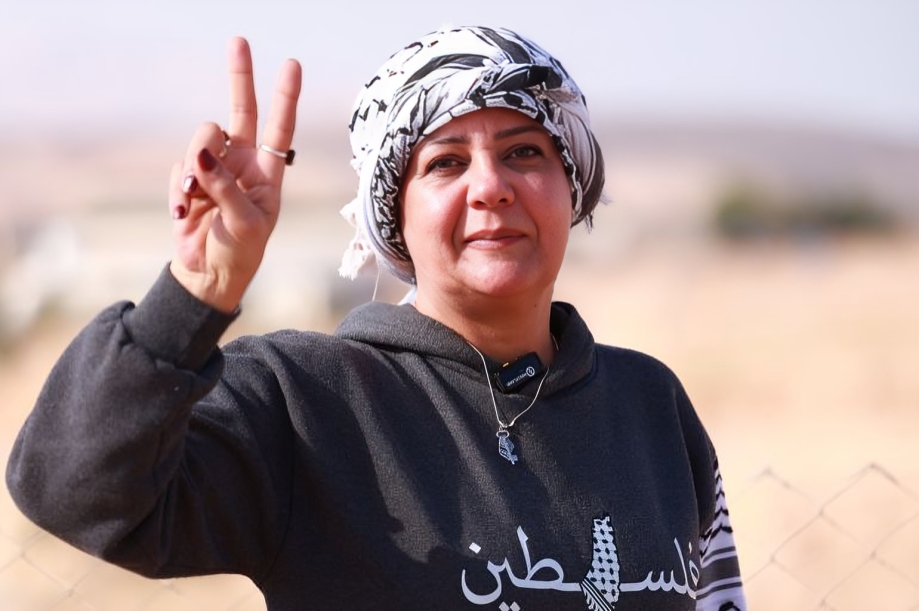
Palestinian farmer Malihah Nassar travels long distances from Ramallah to Jericho to cultivate her land in the Jordan Valley, despite settler harassment and military restrictions, insisting on remaining as a symbol of resilience on threatened agricultural land.
In Jericho, in the eastern occupied West Bank, Malihah Nassar works her land surrounded by three expanding Israeli settlement outposts. What settlers once viewed as barren desert, she has transformed into fertile soil, cultivating medicinal herbs and aromatic plants that are sold in both local and international markets.
Endurance under pressure
Under the slogan “proving existence,” Malihah entered the land in 2020, as she told Al Jazeera, and has since continued despite severe restrictions imposed by the occupation. These include denied access to her land, repeated settler harassment, detentions, road closures, and water cuts.
She also describes how nearby Bedouin communities were pressured and displaced, particularly in areas such as al-Auja.
“They cut off our water for three months, which caused crops to dry out and destroyed even palm trees,” she said. “Despite that, we continued working and planted several crops, including moringa — known as the ‘miracle plant’ — and produced it in different forms such as leaves and powder.”
Malihah also cultivates traditional Palestinian herbs such as sage, thyme, and za’atar, aiming to export them internationally and preserve Palestinian agricultural heritage. In addition, she produces natural skincare products derived entirely from her land.
“The name Palestine provokes them”
From her home in Ramallah, Malihah travels alone through long and difficult routes to reach her farm in Jericho, enduring extreme heat, Israeli military checkpoints where she may be held for hours, and frequent encounters with settlers along the way.

No comments yet. Be the first to share your thoughts.