
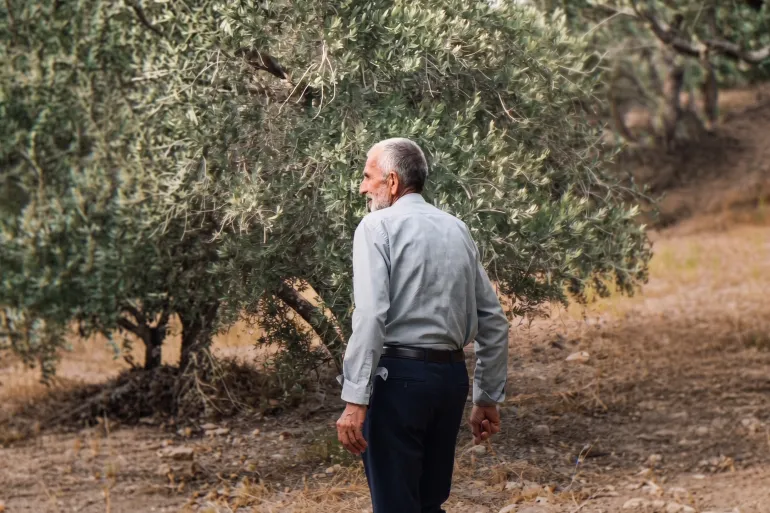
In the area between the towns of Sebastia and al-Masoudiya, northwest of Nablus, farmer Jawad Ghazal stands on the land he inherited from his family, reflecting on the trees and details tied to his childhood memories, now threatened with confiscation for the construction of a settlement park.
For Ghazal, this land has long embodied his family’s history and years of hard work. Today, however, it has become a space under threat of uprooting and transformation. “I learned about the confiscation decision some time ago, and it was a huge shock for me,” Ghazal told Al Jazeera. Pointing to the surrounding lands, he added: “Every corner here carries a memory—from my father and grandfather’s days until now. We lived off the blessings of this land, and today we fear losing it to a settlement project that will even prevent us from accessing it.”
The Israeli army has increasingly used tourism projects and settlement parks as a pretext to impose control over Palestinian lands and alter the historical character of the region, particularly in Sebastia and al-Masoudiya, known for their archaeological and agricultural heritage. Residents fear these projects will serve as gateways to expanding settlement control and imposing further restrictions on the movement of locals and farmers.
“The establishment of the settlement park will affect the entire area,” Ghazal continued. “Farmers will be deprived of their lands, movement will become more difficult, and there is a real fear of settlement control expanding further and further.”
He noted that in recent years, the occupation has severely restricted residents of the area and soldiers have assaulted locals. “We constantly live in a state of anxiety and fear over our lands. There are ongoing attacks and pressure on farmers. I was violently beaten about a year ago while on my land. The goal is clear: to push people to abandon their lands,” Ghazal said.
Despite these challenges, Ghazal insists on remaining on his land. “We will not give up our land. We will preserve the right we inherited from our fathers and grandfathers. This land is part of our life and identity, and what is happening here must not remain unnoticed by the world,” he affirmed.
No comments yet. Be the first to share your thoughts.