
The municipality of Bnei Brak, located in central Israel, has decided, following instructions from the city’s rabbis, to introduce gender separation on sidewalks along several major streets, in a move that has triggered widespread controversy across Israel.
The city will become the first municipality in Israel to implement such a policy in public areas by assigning separate sidewalks for men and women on Shlomo HaMelech and Ezra streets.
Israel’s Channel 13 reported that the measure aims to reduce interaction between men and women in crowded areas, with plans to expand the policy to additional streets in the future.
According to Israeli media reports, barriers and signs will be installed in the designated streets to prevent men and women from mixing, particularly in areas with many wedding halls and heavy pedestrian traffic.
The decision follows guidance and messages from senior city rabbis seeking to manage public movement in accordance with the ultra-Orthodox lifestyle and standards of “modesty.”
The move comes despite previous rulings by the Israeli Supreme Court in 2017 and 2021 that prohibited municipalities, as occurred in the city of Beit Shemesh, from placing signs enforcing gender separation or imposing restrictions on women’s clothing in public streets.
The municipality said it would carry out field adjustments, including installing signs and organizing pedestrian movement on sidewalks to ensure that men and women do not walk through the same passage.
The municipality was quoted as saying: “The message of the city’s rabbis is clear and speaks for itself. The residents of the city who follow the guidance of senior rabbis will act according to these instructions.”
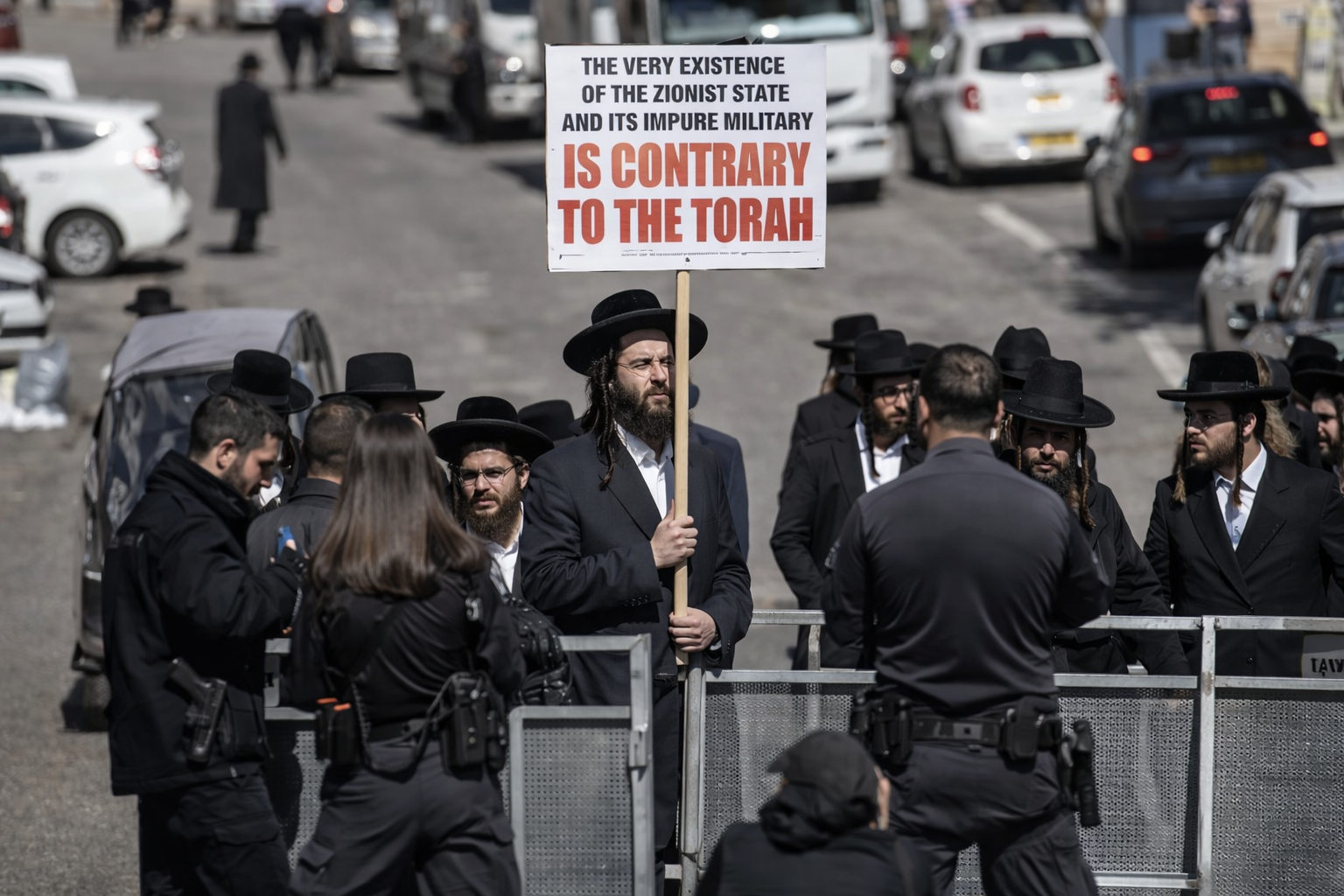
Ultra-Orthodox Jews, known as the “Haredim,” make up the majority of Bnei Brak’s population.
Modesty Regulations
City council member Yaakov Vider said this was not the first time that the predominantly Haredi city had issued directives related to modesty, adding that many decisions over the years had been driven by concerns over religious standards rather than fundamental public issues.
Among the measures he listed were the rejection of establishing a municipal hotline through WhatsApp, opposition to creating Haredi public schools that teach core curriculum subjects unlike private Haredi schools.
Other decisions included orders requiring shops to close at 10 p.m. and vending machines to shut down at 11 p.m., ending public bus services to Tel Aviv’s mixed-gender beach, and preventing stores from advertising on digital screens installed on their buildings.
The city also blocked the opening of a sports club, despite the facility being built two years ago, as it has not yet been allowed to operate.
In addition, the city’s official website states that all cultural events in Bnei Brak are subject to supervision by local modesty patrols.
Widespread Controversy
The decision has sparked significant debate in Israel. Channel 13 reported that former Meretz lawmaker Michal Rozin said on Tuesday that she would petition the Supreme Court against Bnei Brak’s decision to impose gender separation on city sidewalks, adding: “Bnei Brak will not become Tehran.”
Opposition lawmaker Vladimir Beliak from the Yesh Atid party also called on the government’s legal adviser, Gali Baharav-Miara, to examine the legality of the decision.
He was quoted as saying on Tuesday: “This is a decision that violates the right to equality and freedom of movement. Public sidewalks and streets belong to all citizens, and the local authority has no legal authority to turn them into separate spaces for men and women.”
The Haredim account for around 13% of Israel’s population, which exceeds 10 million people.
Members of the community generally refuse military service, arguing that they dedicate their lives to studying the Torah. They say integration into secular society threatens their religious identity and the continuity of their community.
No comments yet. Be the first to share your thoughts.