
South Cotabato and Sultan Kudarat were also hard hit.
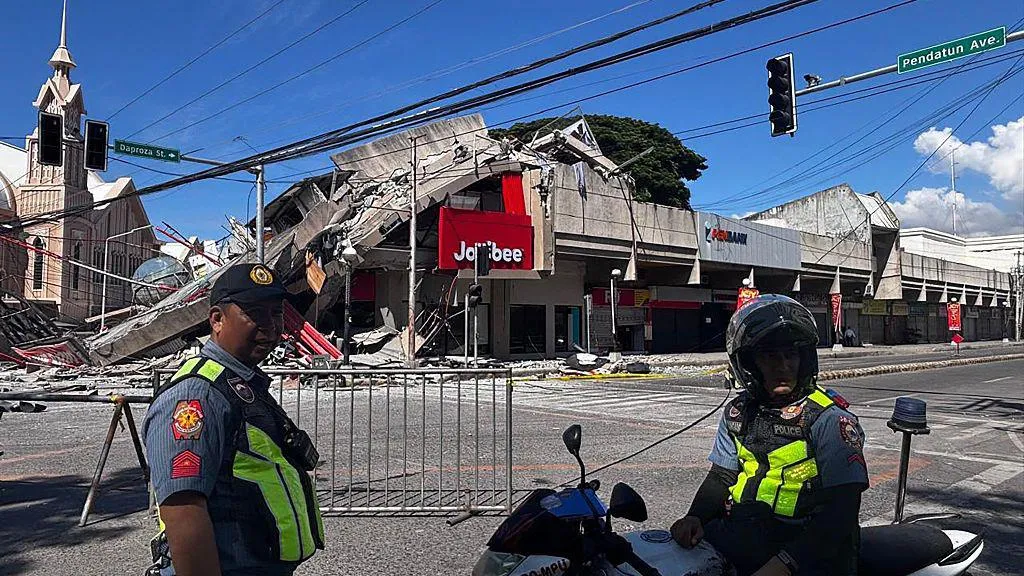
Philippine President Ferdinand Marcos Jr said in a statement that agencies were co-ordinating their disaster response.
"The national government is moving and we will not leave Mindanao behind," he promised.
Marcos also ordered the suspension of classes in affected areas after the quake, which coincided with the first day of the school year in the Philippines.
In one video posted by a primary school in Davao Occidental province, dozens of terrified students can be seen squatting on the shaking ground.
The video also showed a corrugated-roof shelter collapsing behind them, though the school said in its post that no-one had been injured.
More than 130 aftershocks, with magnitudes ranging from 1.3 to 6.7, were
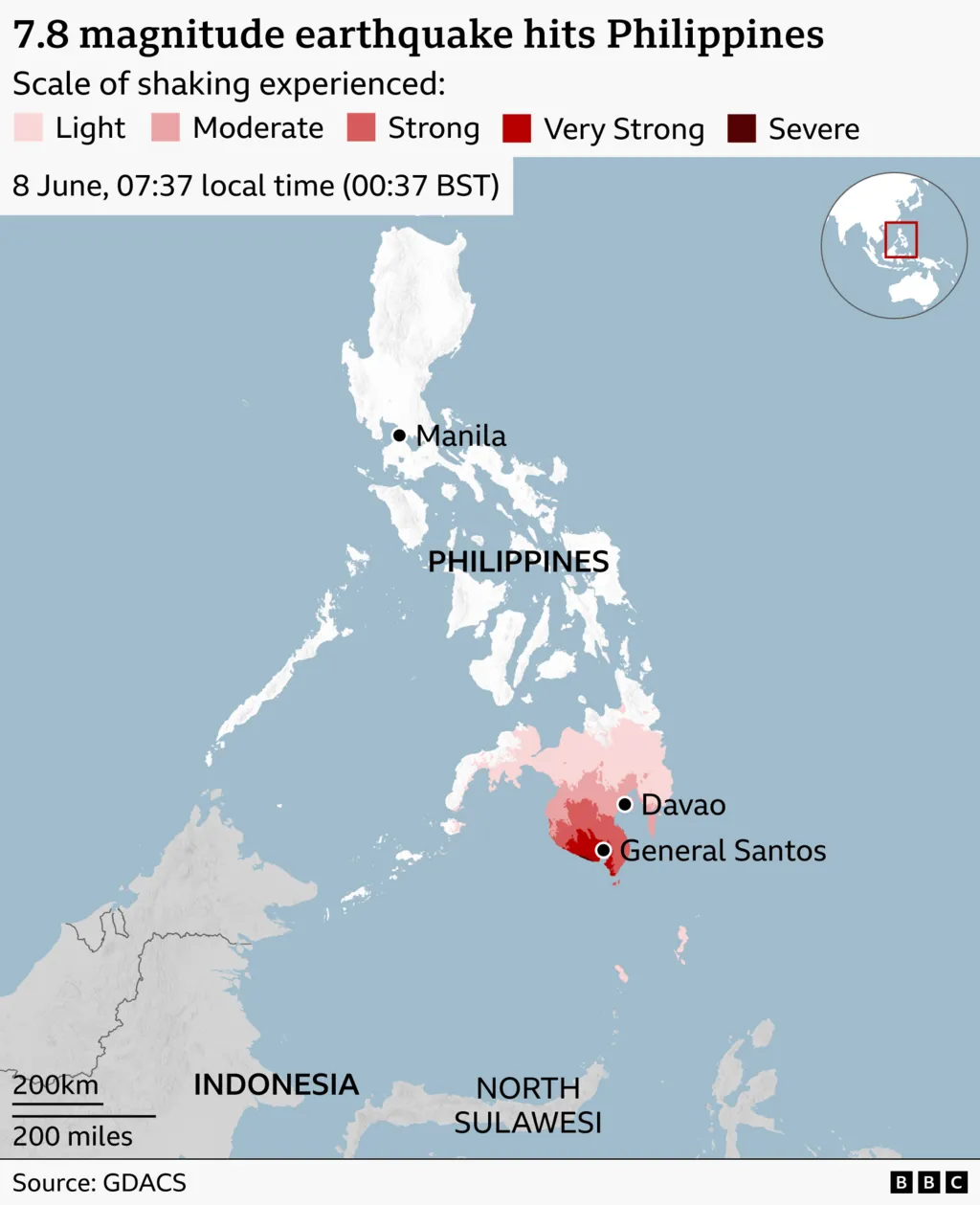
Earthquakes are common in the Philippines, which sits on the geologically unstable "ring of fire". While most of these quakes are minor and pass relatively peacefully, some have proven deadly. Last September, a magnitude-6.9 earthquake struck the central Visayas region, killing more than 70 people.
Shortly after the quake on Monday morning, authorities in Japan warned of one-metre-tall tsunami waves reaching its shores.
A tsunami wave measuring a few centimetres was later observed in the southern prefecture of Okinawa, while a 20cm (0.7ft) wave was measured in the distant Ogasawara Islands, authorities said.
Waves were also detected at several locations along the coasts of Indonesia, Palau and the Philippines. The height of those waves ranged from a few centimetres to 1.4m (4.6ft), according to authorities.
No comments yet. Be the first to share your thoughts.