
While much attention has traditionally focused on the possibility of a full-scale Chinese invasion of Taiwan, military analysts have increasingly explored a different and potentially more disruptive scenario: a maritime blockade of the Taiwan Strait, modeled on pressure strategies similar in effect to the Strait of Hormuz crisis dynamics.
Such a blockade, experts argue, could represent a turning point not only for East Asia but for the global economy. According to defense analyst Robin Johnson, China’s growing naval capabilities and its experience in large-scale maritime exercises suggest that a “joint blockade campaign” may be more feasible—and less risky than invasion—while still achieving strategic pressure on Taiwan.
China has already demonstrated elements of this approach. Large-scale naval drills in recent years have simulated encircling Taiwan, targeting ports, and disrupting supply routes using a combination of warships, aircraft, missiles, drones, and unconventional maritime assets such as coordinated fishing fleets. These exercises reflect what many analysts describe as a “gray zone warfare” strategy—designed to coerce without triggering full-scale war.
The year 2027 has emerged in some Western assessments as a potential inflection point, marking the centenary of the Chinese military. However, U.S. intelligence assessments in 2026 suggest that Beijing has not committed to a fixed timeline for reunification with Taiwan, instead maintaining strategic flexibility while keeping all options open.
At the center of the strategic concern is Taiwan’s role in the global technology supply chain. Despite its small geographic size, the island is responsible for producing around 60% of the world’s semiconductors and a significant share of advanced microchips that power everything from smartphones and AI systems to military platforms such as the F-35 fighter jet.
Analysts warn that a blockade of the Taiwan Strait would not only isolate the island but could also trigger a global economic shock. Estimates suggest that disruptions could cost the world economy trillions of dollars within a single year, given that a significant portion of global maritime trade passes through the region.
Unlike the Strait of Hormuz—critical for global oil flows—the Taiwan Strait has been described as the world’s “technology artery.” Any interruption in its flow of semiconductors would reverberate across industries including defense, communications, automotive manufacturing, and artificial intelligence.
China’s evolving naval doctrine increasingly incorporates both conventional and unconventional tools of pressure. Reports have highlighted the use of large-scale fishing fleets organized in coordinated formations, effectively functioning as auxiliary maritime units capable of obstructing shipping lanes and complicating naval responses.
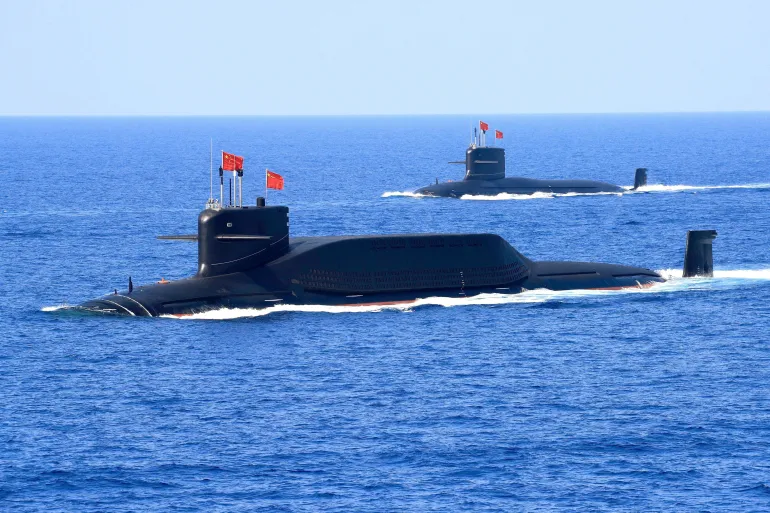
Three potential blockade scenarios are frequently discussed by strategic analysts: a full “iron ring” siege involving military strikes and total port closure; a hybrid “quarantine” model combining limited force with legal and economic coercion; and a lower-intensity “gray blockade” relying on psychological pressure, cyber operations, and selective maritime enforcement.
Each scenario carries escalating risks. While a limited blockade might aim to avoid direct confrontation with the United States, escalation dynamics could rapidly lead to broader military conflict. In such a case, regional tensions could draw in major global powers, transforming a localized crisis into a systemic international shock.
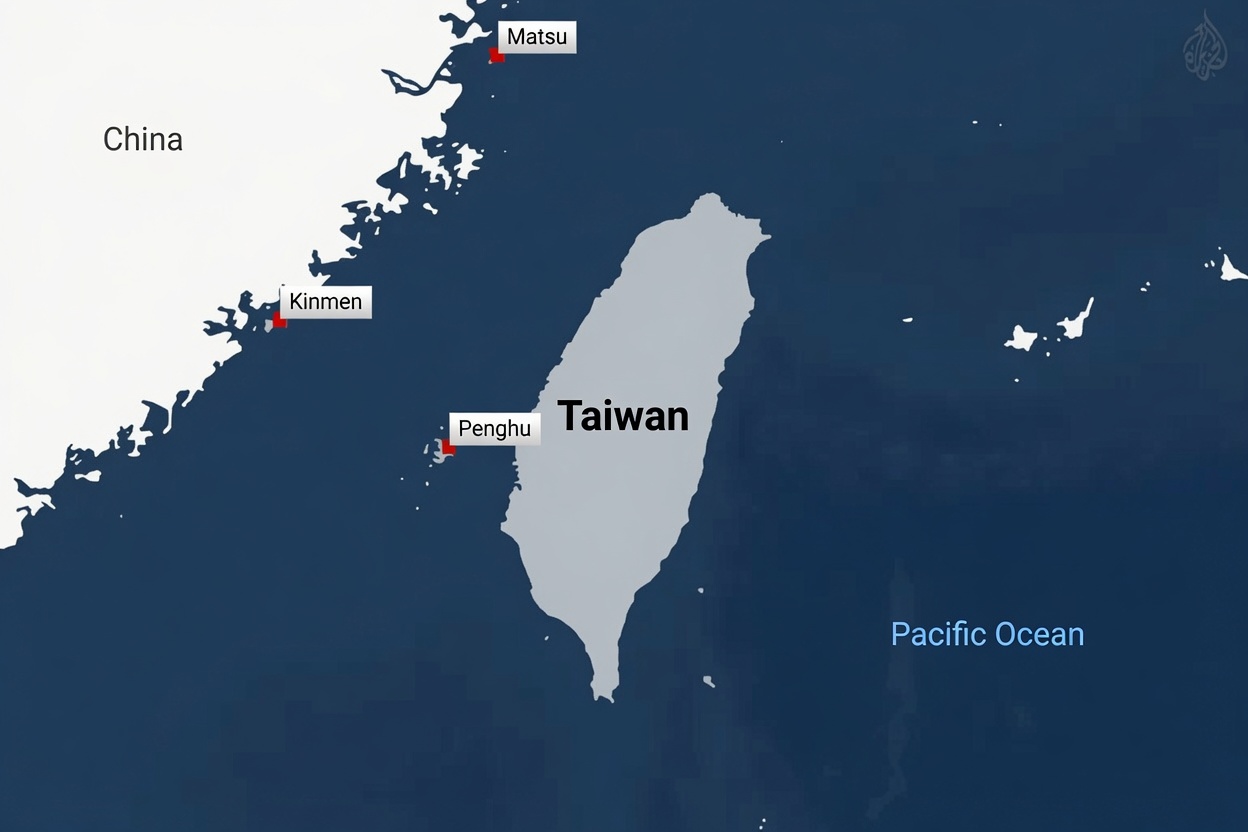
The United States, meanwhile, continues to maintain a policy of strategic ambiguity regarding its response to a Taiwan contingency. However, growing debate within U.S. policy circles suggests that clearer deterrence signals may be necessary to prevent miscalculation between Washington and Beijing.
Conclusion
Ultimately, the Taiwan Strait is increasingly viewed not just as a regional flashpoint, but as a critical chokepoint of the global economy. Any attempt to restrict it—whether through blockade or military escalation—could reshape international trade, destabilize technology supply chains, and trigger economic consequences far beyond East Asia.
No comments yet. Be the first to share your thoughts.