A $11 Billion “Wellness Island” Is Being Built in Abu Dhabi
Abu Dhabi is developing a new island designed around health and well-being, aiming to turn daily wellness into a way of life through urban planning, green spaces, and health-focused infrastructure.
As interest in health and wellness continues to grow, it is no surprise that medical tourism and wellness-focused travel are expanding. However, plans are now underway on a small Gulf island to make self-care a lifestyle rather than just a temporary escape.
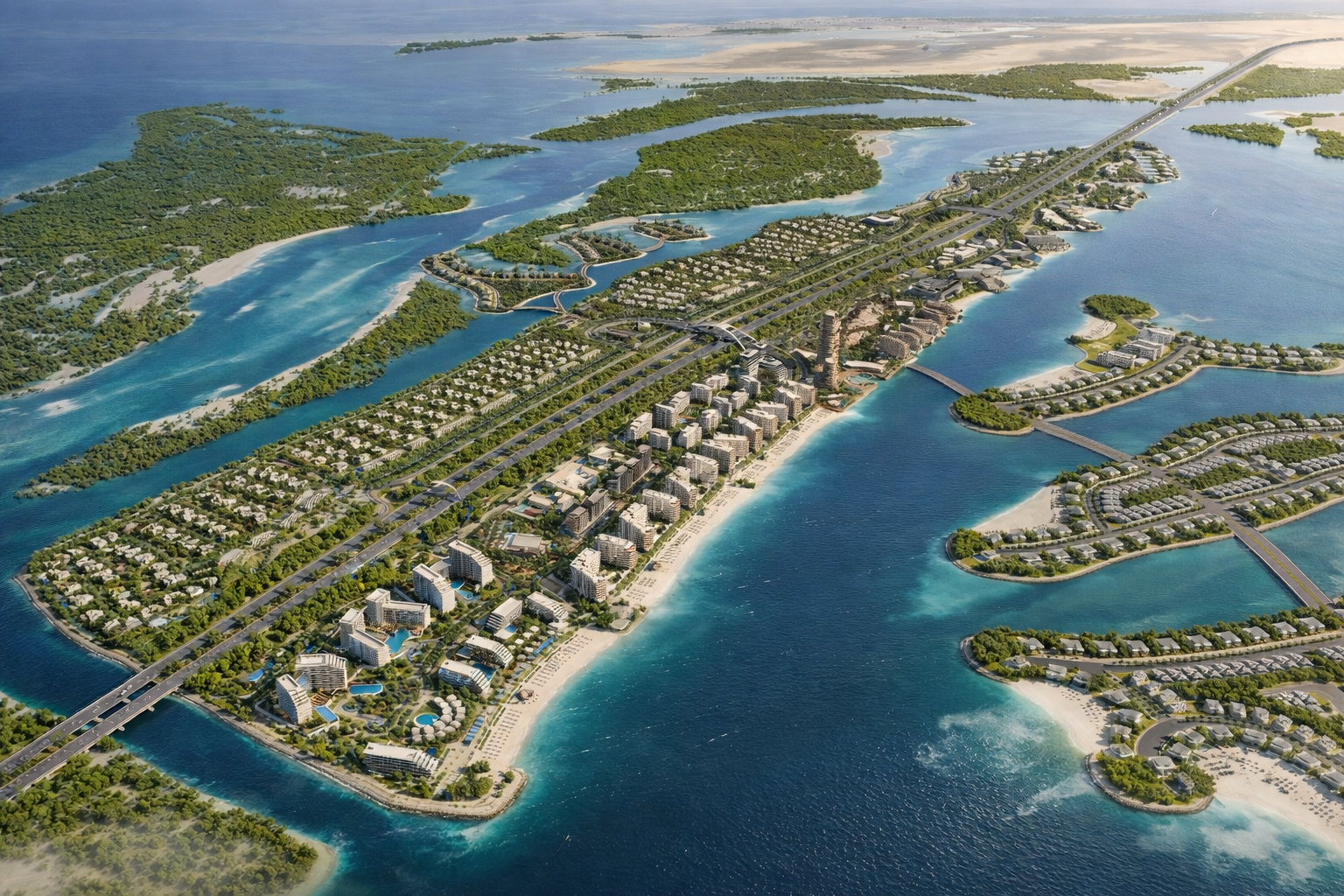
Fahd Island in Abu Dhabi is scheduled to be fully completed in 2029. The project includes more than 6,000 homes and promises future residents a coastal community built from the ground up to enhance physical and mental well-being.
The $10.9 billion infrastructure project, equivalent to 40 billion UAE dirhams, is being developed by Aldar Development, a real estate company owned by the Abu Dhabi government. Aldar says that all infrastructure, services, and facilities have been specifically designed to create a “sanctuary” focused on fitness and wellness.
“We have ensured that every design decision and every business decision looks at the product through the lens of health and wellness,” Emma McRae Brien, senior vice president at Aldar Development, told CNN.
“It is about the fundamental principles of feeling comfortable. You have to make sure that your environment supports that.”
Green Living
The concept of wellness architecture — designing spaces that actively promote physical, emotional, and cognitive health — is not limited to Fahd Island, which is located between the entertainment and cultural hubs of Yas Island and Saadiyat Island.
Research has shown that surrounding environments have a significant impact on human health. A comprehensive U.S. study by researchers at the Massachusetts Institute of Technology (MIT), published this month, linked living in walkable neighborhoods with extensive green spaces to better physical and mental health.
The study highlighted well-connected residential areas with shorter blocks, diverse facilities, and parks as examples of effective urban planning.
Developers of Fahd Island aim to achieve similar goals through the 10-kilometer Berm Park, which will run through the center of the planned development.
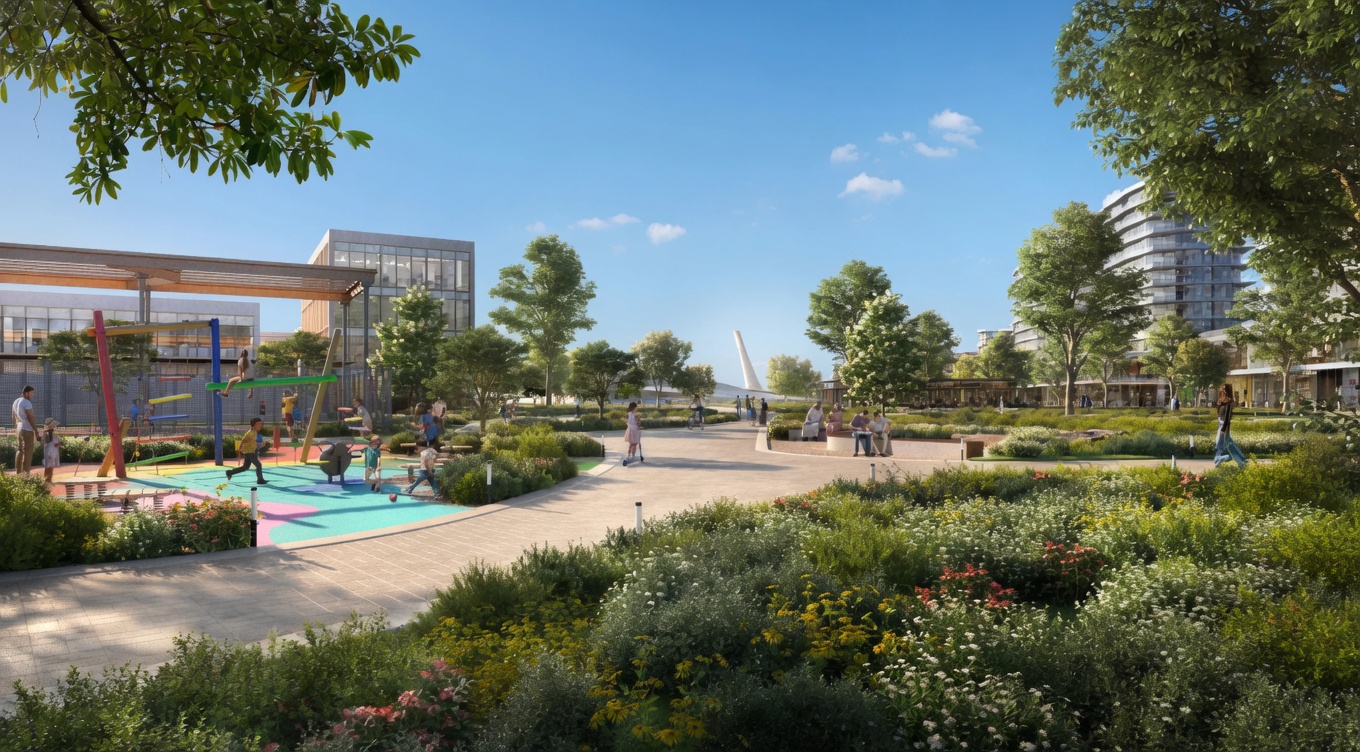
The park is designed as a “fitness and recreation corridor” featuring running paths and three cycling tracks. It will also serve as a visual and noise barrier for the beach and mangrove forest areas on either side.
Along the 11-kilometer coastline, three residential districts are planned, ranging from apartments to ultra-luxury villas, covering an area of 2.7 million square meters (29 million square feet).
Apartment prices at Aldar’s development start at 1.9 million UAE dirhams ($517,000) and reach up to 7.6 million UAE dirhams ($2 million).
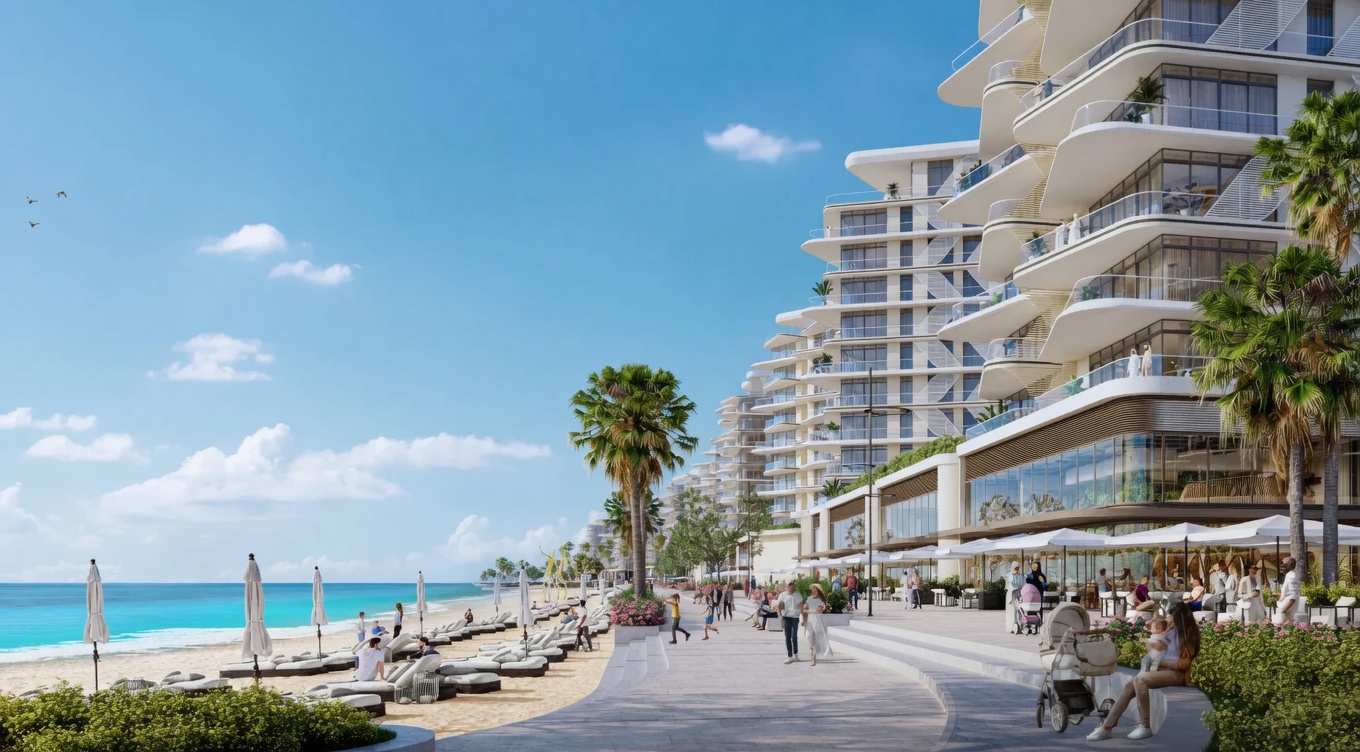
Residents will have access to a wide range of facilities, from a main commercial street to beach clubs and water sports centers, all connected through a 15-kilometer circular pedestrian pathway.
Brien explained that more than 70% of these paths will be shaded as part of the developer’s plan to make the island fully walkable.
“I think there is a major misunderstanding of wellness. The fact that yoga is a wellness activity does not necessarily mean it is what people need to feel good every day,” Brien said.
“I need social connection, and our waterfront promenade will provide that.”
She added that many people mistakenly believe that adding a gym or spa to a building automatically creates wellness.
The development will also allow students at King’s College Wimbledon to walk to school, with the British private school scheduled to open a campus on the island in September 2028.
Brien said the institute will become the world’s first school certified by Fitwel, a healthy building certification program developed by the U.S. Centers for Disease Control and Prevention (CDC) and the U.S. General Services Administration (GSA), which evaluates new structures based on their impact on occupants’ health.
The island itself has also received certification from the program, another global milestone, achieving the highest three-star rating. The assessment covered categories including physical activity, healthy food options, mental health and well-being, and reducing disease and absenteeism.
Joanna Frank, CEO of the Center for Active Design, which operates Fitwel, said in an email to CNN: “What stood out most was Aldar’s commitment to viewing health as a system rather than a collection of individual amenities.”
“Fahd Island shows the world that health can be intentionally integrated into communities from the beginning, creating places that are not only beautiful but also designed for people to thrive for generations to come.”
For Brien, this demonstrates that the project is not simply “wellness washing,” where organizations promote the appearance of well-being while providing limited tangible benefits.
“People think putting a gym or spa in a building is wellness. That is not true,” she said.
“It is about designing the environment to ensure people can make the right choices and healthy decisions every day.”
“It is about enabling people to feel their best, whatever that means for them.”

No comments yet. Be the first to share your thoughts.